The first week of November is when the holiday plants start appearing, and it is also when the questions start. Is a poinsettia poisonous? Why did mine drop every leaf in a week? When do I plant an amaryllis so it blooms for Christmas? We get all of these every year, so this is the guide we wish we could hand across the counter. The plant facts and the florist advice are mixed together here, and we mark the parts that are our own experience.
🌹 Poinsettias: Easier Than Their Reputation
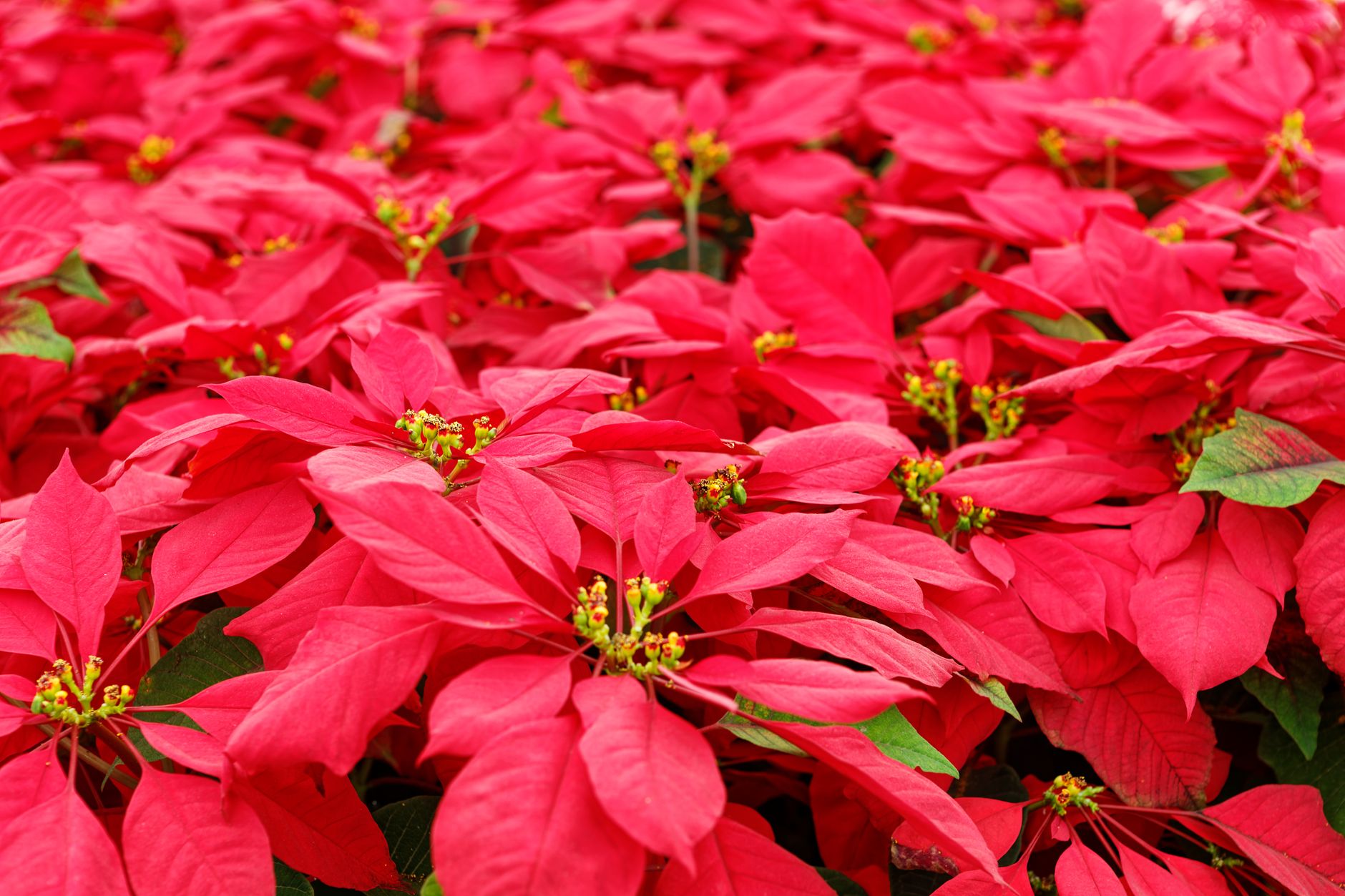
The poinsettia (Euphorbia pulcherrima) is native to Mexico and Central America, and in Mexico and Guatemala it is called nochebuena, meaning “Christmas Eve flower.” More than 70 million are sold in the United States each year, and red plants account for over three-quarters of those sales. The colored parts that look like petals are not petals. They are bracts, which are modified leaves, and the true flowers are the small yellow clusters in the center, called cyathia.
Keeping one alive. Care is simple and worth following:
- Light: at least six hours of bright, indirect light a day. Direct sun can fade the bracts.
- Temperature: daytime temperatures should not go above 70°F, and a chill below 50°F can cause leaf drop. Keep it away from drafts, heaters, fireplaces and vents.
- Water: water thoroughly when the soil surface feels dry, take the plant out of its decorative pot cover to do it, and never leave it standing in water. Do not fertilize while it is in bloom.
Here is the part that is our own experience: most poinsettia disasters happen between the store and the front door. If it is a cold day, wrap the plant before you carry it to the car, and do not leave it sitting in a cold car while you finish errands. The 50°F line is easy to cross in a Pacific Northwest or Northern California parking lot in December.
🐾 The Poinsettia Poison Myth
You have probably heard that poinsettias are deadly. That belief traces to a 1919 urban legend about a child, an assertion repeated in a 1944 book that the author later admitted was hearsay. A survey of more than 20,000 calls to American poison control centers from 1985 to 1992 found no fatalities, with 92.4 percent of exposure calls showing no effect. Poinsettias are not considered toxic, though eating the foliage may cause a stomachache, vomiting or diarrhea, and the milky sap can irritate skin and eyes. In other words: not a plant to snack on, but not the danger of legend. If your pet eats any plant and seems unwell, call your veterinarian.
🌷 Amaryllis: Gorgeous, and the One to Keep Away From Pets
Amaryllis is the opposite story. All parts of the plant are poisonous to humans and pets if ingested in large quantities, and the bulb is the most toxic part. That is a good reason to place a potted amaryllis out of reach of a curious dog or cat, and to be careful with bulbs you have not planted yet.
A small naming note: what stores sell as amaryllis is botanically Hippeastrum. True Amaryllis is a South African genus, while Hippeastrum is from the Americas, though the common name “amaryllis” has been used for the ornamental bulbs for years.
Timing it for the holidays. Flowers can be expected in 4 to 8 weeks when bulbs are planted in early to mid-November. The rest of the advice:
- Choose a pot only one to two inches wider than the bulb, with drainage holes, and keep a third to a half of the bulb above the soil to help avoid a fungal disease called red blotch.
- Give it at least four hours of direct sun, rotate the pot every few days so the stalk stays straight, and stake a heavy stalk or cut it and put it in a vase if it bends.
- Keep it warm (70 to 75°F) until growth starts, then cooler (around 65°F) once it flowers to prolong the blooms.
- Waxed amaryllis need no water or soil, but they are meant to be discarded after blooming, and amaryllis forced in water will not bloom again in water.
As a gift, a boxed or waxed amaryllis is one of the easiest holiday presents we know, because the recipient only has to add light and wait.
❄️ Paperwhites: Fast, Fragrant and Staggerable
Paperwhite narcissus are the quickest holiday bulb. They do not need chilling, flowers appear in three to four weeks, and cool temperatures of 50 to 65°F and indirect light prolong the bloom. Successive plantings made about two weeks apart after mid-October can give you indoor flowers from Thanksgiving into late March, and paperwhites are best discarded after forcing.
Two things from us. First, paperwhites are strongly scented, which some people love and others cannot stand in a small room. If someone on your list is fragrance-sensitive, see our posts on the most fragrant and least fragrant flowers before choosing. Second, because they are so easy to stagger, they make a good plan for a household that wants something blooming every couple of weeks.
🌿 Holly and Cut Greens
Holly is one of the oldest holiday plants. European holly has been associated with Christmas, and before that with the Roman festival of Saturnalia, and its evergreen leaves symbolize life continuing through winter. Two facts help when you buy it. Holly is usually dioecious, which means only female plants produce the red berries and a male plant must be nearby to fertilize them. And the berries are generally regarded as toxic to humans, so keep branches with berries away from small children and pets.
For cut greens in a vase or on a mantel, this part is ours: start with fresh stems, give them a fresh cut, put them in water, and keep them away from heaters and fireplaces. Cool rooms keep greens fresh longer, and a bowl or vase that you top off every day does better than dry greens left lying on a shelf. When the season ends, our guide on recycling and mulching arrangements covers what to do with them.
🎁 Cut Flowers Next to the Holiday Plants
Potted plants are only half the holiday picture. A table arrangement for a dinner or a gift bouquet for a host is still the standard, and some flowers hold up far better than others in a warm, busy house. Our shared guide on why some flowers last and others fade and our care tips are good to read before you buy. If you want the fall favorite, mums are still around. And dried or preserved options are covered in our dried flowers guide for anyone who wants decor that lasts into January.
📋 The Short Version
- Poinsettia: bright indirect light, no drafts, nothing below 50°F, water when the surface is dry. Not deadly: the myth traces to a 1919 urban legend.
- Amaryllis: plant in early to mid-November for flowers in 4 to 8 weeks. All parts are poisonous to pets and people in large quantities, the bulb most of all.
- Paperwhites: no chilling, flowers in 3 to 4 weeks, strongly scented; plant every two weeks to stretch the show.
- Holly: berries only on female plants, and the berries are toxic, so keep them out of reach.
- Poinsettia day: National Poinsettia Day in the U.S. is December 12, a Saturday this year.