It’s easy to forget now, but there was a stretch in 2020 when the whole flower world felt upside down. Weddings vanished from the calendar. Office deliveries disappeared overnight. Hospitals restricted visitors. Funeral attendance was limited. Supply chains got weird in ways that would have sounded made up in 2019. And yet, in the middle of all that uncertainty, flowers ended up becoming more important—not less.
For florists in the Bay Area, COVID wasn’t just a difficult season. It was a total rewiring of how delivery, gifting, events, and even the meaning of flowers worked. The good news? The industry adapted. And in many ways, it came out smarter, more flexible, and more appreciated than ever. Here’s what changed, what stuck, and how things look today for flower delivery around San Francisco, Oakland, Berkeley, San Jose, and the broader Bay Area.
🚫 The First Shock: Events Fell Off a Cliff
One of the biggest immediate impacts of the pandemic was the collapse of events. Weddings, corporate functions, galas, conferences, hotel installs, restaurant openings—all the places florists normally send huge volumes of flowers either got canceled or postponed. In the Bay Area, where event design is a major revenue stream for many floral businesses, that was brutal.
Think about it: one good-sized wedding can represent dozens of centerpieces, ceremony florals, bouquets, boutonnieres, and installations. A single hotel contract can mean recurring lobby arrangements week after week. When all of that disappeared, florists had to pivot fast or risk getting flattened.
On top of that, many people initially assumed flowers were a luxury nobody would prioritize during a crisis. That turned out to be wrong—but there was definitely a frightening few weeks where the whole industry held its breath.
🚚 Delivery Suddenly Became the Main Event
Once people realized they couldn’t gather in person, flower delivery took on a whole new role. Birthdays still happened. Anniversaries still happened. New babies still arrived. People still got sick, lost loved ones, got promoted, got dumped, and had rough Tuesdays. The difference was that flowers had to do more emotional heavy lifting because the sender often couldn’t show up in person.
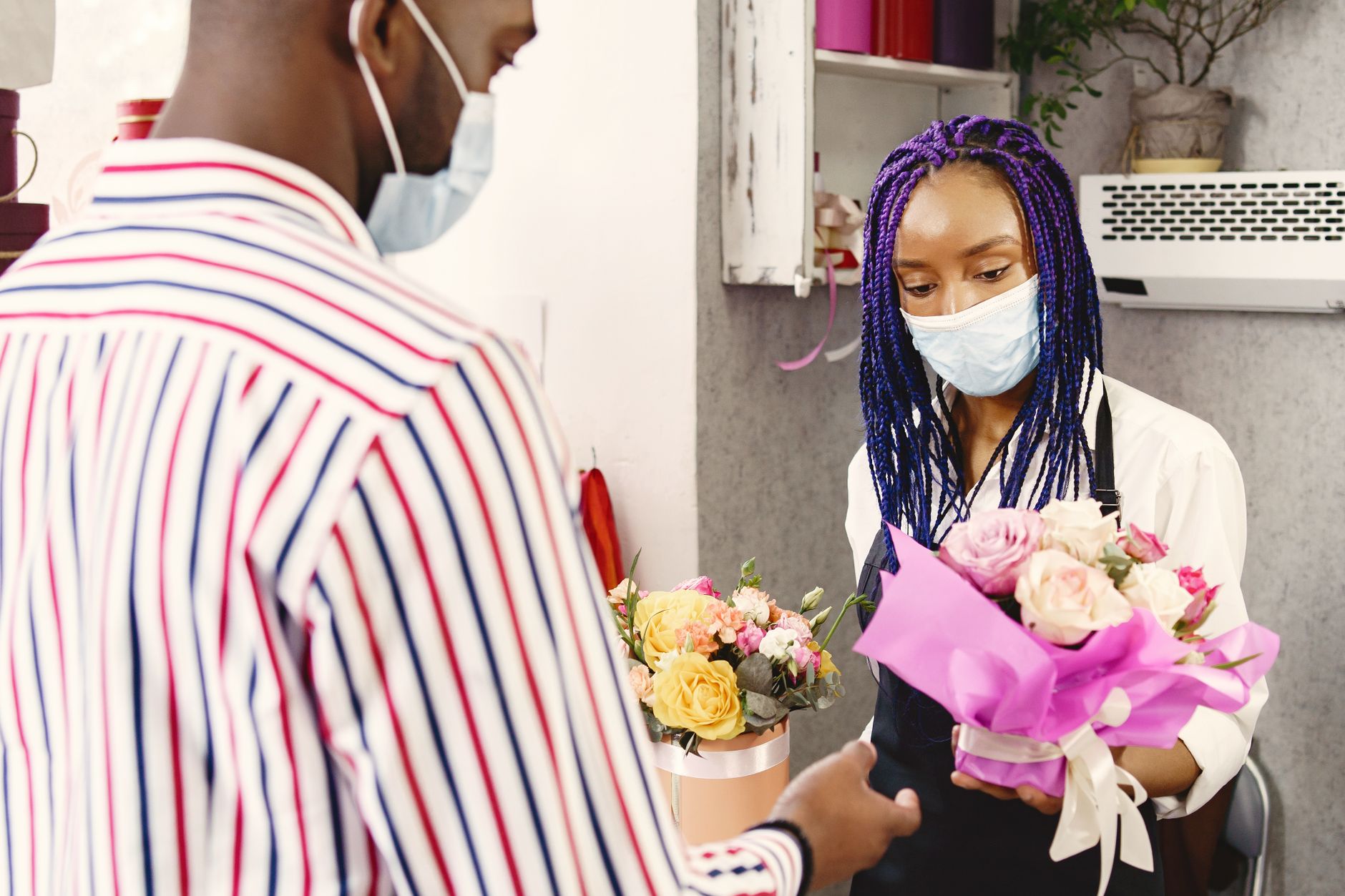
That changed delivery culture fast. Contactless drop-offs became standard. Florists left arrangements on porches, at apartment lobbies, with front-desk staff, and outside doors with photo confirmation. Delivery notes got longer and more specific. Instead of “ring bell,” you’d get “leave on left side of porch under overhang, text when delivered, recipient is on a Zoom call and has a reactive dog.”
Bay Area florists got very, very good at this. In dense neighborhoods from Oakland apartment buildings to San Francisco walk-ups to Peninsula subdivisions with gate codes and delivery windows, the logistics became more like mission planning. And honestly? That operational discipline has stuck around in a good way. Delivery today is smoother because the pandemic forced everyone to get more precise.
🌱 Supply Chain Chaos Was Real
If you ordered flowers in 2020 or 2021 and noticed substitutions, higher prices, or certain blooms missing entirely, you weren’t imagining things. The supply chain was a mess.
A huge percentage of cut flowers sold in the United States come from Colombia and Ecuador, and the early pandemic hit international transport hard. Cargo capacity shrank. Passenger flights—which often carry floral freight in the belly of the plane—got cut dramatically. Labor shortages affected farms, packing houses, importers, and local wholesalers. Add in domestic trucking delays and suddenly the path from a rose farm outside Bogotá to a vase in Berkeley looked a lot less reliable than it used to.
Florists had to become improvisers. If the expected white hydrangeas didn’t make it, you pivoted to stock, football mums, or garden roses. If peonies vanished, you rebuilt the palette. If eucalyptus was short, you found a different green. The best shops didn’t panic—they designed around the gaps. Customers got more educated too. People learned, maybe for the first time, that flowers aren’t manufactured objects; they’re agricultural products, and agriculture is gloriously, frustratingly non-guaranteed.
🏠 Home Became the New Centerpiece
One of the most interesting changes was how much more people started buying flowers for themselves. Before COVID, a lot of flower spending centered on events, offices, and gifts for others. During lockdown, people were suddenly staring at the same dining table every day, turning spare rooms into offices, and desperately looking for ways to make home feel less like a holding pattern.
Enter flowers. Bouquets became mood management. A bunch of tulips on the kitchen counter was no longer just decorative; it was a signal that the week still had shape. A fresh arrangement by the laptop made the endless Zoom cycle slightly less bleak. Plants also surged for the same reason—people wanted living things around them.
That trend was especially strong in the Bay Area, where a lot of people were working remotely for long stretches. If you were spending all day in a San Jose home office, a San Francisco apartment, or an Oakland duplex, flowers became a little daily rebellion against sameness.
💍 Micro-Weddings Changed Floral Design
The wedding side of the business didn’t disappear forever—it shrank, fragmented, and got more creative. Big weddings gave way to backyard ceremonies, City Hall elopements, courthouse celebrations, vineyard minimony weekends, and tiny outdoor gatherings with ten people and a very determined photographer.
That changed how florists designed. Instead of 18 centerpieces and a suspended floral chandelier, couples wanted one knockout bouquet, a ceremony accent, a few bud vases, and maybe something pretty for a backyard dinner table. The emphasis shifted from scale to intimacy. Bay Area florists who could work small without making it feel small did really well.
That sensibility is still around today. Even though large weddings are back, many couples remain more intentional. They’d rather spend on a few meaningful floral moments than fill a room just because Pinterest said so.
🏥 Hospitals, Sympathy, and the Emotional Weight of Flowers
The pandemic also sharpened the emotional role flowers play in healthcare and sympathy settings. Hospital rules became stricter. Deliveries had to be coordinated carefully. Some units stopped accepting flowers temporarily. Families couldn’t always visit. Funerals were smaller, delayed, or streamed online. That meant flowers often stood in for physical presence in a way they hadn’t before.
For Bay Area delivery, that required more communication and more care. Florists had to know which facilities were accepting deliveries, where they could be left, and whether a nursing station or front desk would actually get them to the recipient. It wasn’t glamorous work, but it mattered. A lot.
And customers noticed. One of the quiet outcomes of COVID is that people gained a deeper appreciation for what flower delivery actually does. It’s not just decorative; it’s relational. It says, “I can’t be there, but I am very much here.”
📈 So How Is the Industry Doing Now?
Much better—though not in a simple, snap-back-to-normal way.
Today, the flower industry is more stable than it was in the peak COVID years, but it has permanently changed in a few important ways:
Delivery is stronger than ever. Customers are more comfortable ordering online, more specific about delivery instructions, and more likely to send flowers as a direct-to-door gesture rather than waiting for an in-person occasion.
Customers are more flexible. People understand substitutions better now. They know availability changes with season, weather, and supply. That has made good florists even more valuable, because the trust shifted from “I want this exact stem combination” to “I want something beautiful and fresh, made well.”
Events are back, but leaner. Weddings, corporate installs, and celebrations have returned, but many clients are more selective and budget-aware. There’s less appetite for waste and more interest in quality over sheer quantity.
Local matters more. The pandemic reminded everyone how fragile long supply chains can be. Customers now pay more attention to local service, local accountability, and whether the florist actually knows the area they deliver to. That’s been a major win for independent regional shops.
Flowers still make people feel human. That part did not change. If anything, it got stronger.
🌺 What This Means for the Bay Area Today
In the Bay Area, flower delivery is in a pretty healthy place right now. The region still supports a strong mix of occasion-based gifting, sympathy work, weddings, self-purchase, and corporate orders. The climate is good for certain local growers, the food-and-design culture appreciates quality, and customers are savvy enough to value the difference between a real florist and a warehouse box operation.
That doesn’t mean everything is perfect. Costs are still higher than they used to be—labor, fuel, imported stems, rent, insurance, the whole deal. But the industry is no longer in survival mode. It’s operating with more resilience and more realism.
And for shops like bayflorist.com, that means being able to do what florists do best: deliver beauty, yes, but also reassurance, warmth, humor, and connection. Sometimes in a vase. Sometimes to a lobby. Sometimes to a doorstep with a very specific delivery note and a barking dog behind the door.
✨ The Good-Natured Bottom Line
COVID was rough on the flower industry. No point sugarcoating that. But it also proved something important: flowers aren’t frivolous. They’re part of how people show up for each other when life gets weird, hard, joyful, messy, or all four at once.
So yes, the pandemic changed flower delivery in the Bay Area. It made it more digital, more logistical, more flexible, and honestly a little tougher. But it also made the value of flowers clearer than ever. And that’s a pretty good place to bloom from.