
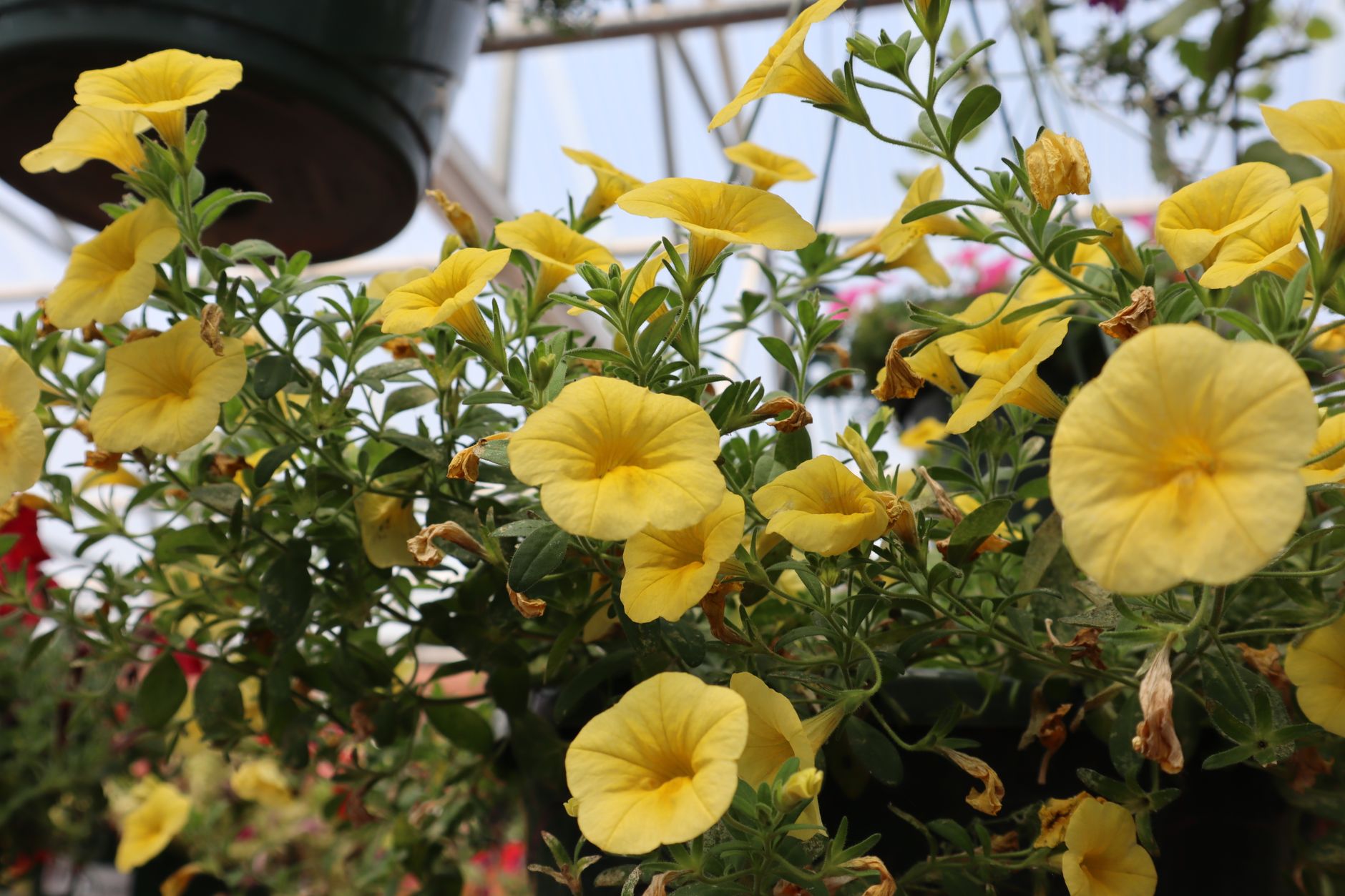
Hanging basket season is one of the great joys of spring and early summer. Suddenly porches, patios, balconies, entryways, and little side-yard corners all get a lot more cheerful. A good basket makes it look like you have your life together, even if your garden gloves are missing, your hose has developed an attitude problem, and you are currently trying to remember whether you watered anything yesterday.
The catch is this: hanging baskets are beautiful, but they are also needy little overachievers. They dry out faster than in-ground plants, burn out faster in heat, and can go from glorious to tragic with surprising speed if the care is inconsistent. The good news is that they are not actually mysterious. With the right habits, you can keep them blooming far longer than most people do.
So if you are bringing home a basket now that the season is getting going, here is how to help it stay full, healthy, and flower-happy for as long as possible — plus a few common myths that deserve to be gently escorted out of the greenhouse.
💧 First: Hanging Baskets Need More Water Than Most People Expect
This is the big one. Hanging baskets dry out faster because they are elevated, exposed to air on all sides, and holding a relatively limited amount of soil. That means they can lose moisture quickly, especially on warm, breezy, or bright days.
Many people underwater them simply because they are used to the rhythm of pots on the ground or garden beds. A basket is different. In peak season, some may need checking every day, and in hotter spells they may even need water more than once if conditions are intense.
The best approach is not to water on blind autopilot. It is to check the basket daily. Feel the soil. Lift the basket slightly if you can. If it feels surprisingly light, that is a clue. If the top inch is dry and the basket is in active bloom, it is probably time.
🚿 Water Deeply, Not Lazily
One of the most common mistakes is giving a hanging basket a quick little sprinkle and calling it good. That does almost nothing if the root ball inside is already dry. What you want is a deep, thorough watering so moisture actually reaches the full soil mass.
Water until you see it flowing from the bottom. That is your sign that the soil has been properly saturated. If the basket has gotten very dry, you may notice water racing straight through at first. That can happen when dry potting mix becomes reluctant to absorb moisture. In that case, water slowly, pause, and then water again so the root zone has time to rehydrate.
A deeply dry basket is harder to recover than one that was kept evenly moist all along, so consistency matters.
☀️ Sun Is Great — Until It Is Too Much
People often assume that because a basket is labeled for sun, more sun must always be better. Not necessarily. In the Bay Area, light conditions can vary wildly depending on where you are. A basket in fog-cooled San Francisco behaves differently from one hanging in a hotter inland yard in Walnut Creek, Concord, San Jose, or parts of the East Bay.
Morning sun is usually easier for baskets to handle than punishing late-afternoon exposure. If your basket is blooming well but starts looking exhausted, bleached, or wilty by evening even when you are watering, the issue may be heat stress, not laziness on the plant’s part.
Sometimes the smartest move is not more water but a slight location adjustment — somewhere with bright light and maybe gentler afternoon conditions. Plants can love sun and still dislike being roasted.
🌼 Feed the Blooms, Because Basket Plants Are Heavy Eaters
Another big misconception is that if the basket came looking lush and beautiful, it will coast on charm alone for the rest of the season. It will not. Hanging baskets are usually planted densely, and blooming plants use a lot of energy. That means nutrients get depleted faster than many people expect.
To keep the flowers coming, use a regular feeding routine. A diluted liquid fertilizer for blooming plants is often the easiest option. Many gardeners do well feeding every week or two at a mild strength rather than waiting forever and then trying to rescue a tired basket in one dramatic nutrient speech.
If your basket is leafy but not flowering much, that can mean a few different things, but one possibility is that feeding is off balance. Too much nitrogen can push soft green growth at the expense of flowers. A bloom-oriented fertilizer is usually the better fit once the basket is in active display mode.
✂️ Deadheading Is Not Fancy — It Is Practical
If you want a basket to keep blooming, get comfortable with deadheading. That just means removing spent flowers before the plant puts too much energy into seed production or starts looking tired and stringy.
This is especially helpful for many classic basket plants. Snipping off faded blossoms and tired stems tells the plant, in effect, to keep going instead of wrapping up the show early.
Some newer varieties are marketed as self-cleaning, and yes, some do drop old flowers more neatly than others. But even then, a little cleanup usually helps with appearance, airflow, and overall vigor. A basket that gets a few minutes of grooming each week almost always looks better than one left to become a crunchy necklace of old blooms.
🌿 Yes, You Can Trim a Basket Back — and Sometimes You Should
People often get nervous about trimming a basket because it feels rude. The plant worked hard. It is flowering. Who are we to interfere?
But in reality, a basket that is getting long, thin, tangled, or sparse in the middle often benefits from a light cutback. A gentle trim can encourage fuller regrowth and a fresher flush of flowers, especially if the basket is starting to look tired halfway through the season.
This is one of the biggest misconceptions worth debunking: trimming does not automatically ruin the basket. Done thoughtfully, it often improves it. Many trailing plants respond well to being shaped back a bit instead of being allowed to become one heroic, exhausted waterfall of stems held together by optimism.
🌡️ Heat Waves Change Everything
One of the trickiest parts of hanging basket care is that your usual routine may work beautifully for weeks — and then one hot spell changes the entire conversation. In a heat wave, baskets can dry fast, wilt fast, and stress fast.
When hotter weather rolls through, think in terms of temporary protection:
- check water more often
- water early in the day so plants start hydrated
- consider shifting baskets out of harsh late-afternoon blast zones if possible
- do not assume yesterday’s watering schedule is enough today
This is especially true in inland microclimates around the Bay, where temperatures can jump much higher than people closer to the fog belt might expect.
🚩 Myth #1: Wilted Means the Plant Is Dead
Not always. A wilted basket is definitely asking for help, but it is not automatically finished. Many basket plants can perk back up if they were simply too dry and have not been stressed repeatedly for too long.
If the basket is bone dry, rehydrate it slowly and thoroughly. Give it time. If needed, water, wait, and water again. If the plant perks up later in the day or by the next morning, you caught it in time.
Now, if a basket keeps cycling through extreme drought over and over, that is a different story. Repeated stress weakens roots and reduces bloom performance. But one wilted afternoon is not always a funeral.
🚩 Myth #2: More Water Always Solves Everything
Nope. Too little water is a problem, but so is constantly soggy soil with poor drainage. If a basket stays waterlogged, roots can struggle for oxygen and decline. That leads to yellowing, rot, general sulking, and a plant that looks confused in several directions at once.
The goal is not permanent swamp conditions. The goal is even moisture with good drainage. Thorough watering followed by natural drying toward the next check is very different from keeping the basket perpetually drenched.
🚩 Myth #3: Blooming Plants Should Never Be Moved
Sometimes people think that once a basket is placed, moving it will upset the flowers so deeply that all trust will be lost. In truth, moving a basket to a better spot can be one of the smartest things you do.
If the current location is too windy, too hot, too dark, or too punishing in the afternoon, the basket may perform much better with a modest adjustment. Plants care a lot more about usable light, manageable stress, and consistent moisture than about your original hanging-hook commitment.
🌺 A Few Habits That Really Help Baskets Last
If you want the simple version, these habits make the biggest difference:
- check baskets daily, especially in warm weather
- water deeply rather than giving tiny surface sprinkles
- feed regularly during bloom season
- deadhead and tidy every week
- trim lightly if growth gets leggy or sparse
- adjust placement if sun or heat is too intense
- pay attention to weather shifts instead of using one rigid schedule forever
These are not glamorous secrets. They are just the consistent little things that keep baskets looking full instead of frazzled.
✨ The Bottom Line
Hanging baskets can absolutely keep blooming long after you bring them home, but they need more attentive care than many people assume. Water deeply, feed regularly, deadhead often, trim without fear, and remember that light and heat conditions matter just as much as watering does.
The biggest misconception is probably this: that a beautiful basket should somehow stay beautiful on its own. It will not. But with a little steady care, it can stay colorful, lush, and full of flowers for much longer than the average neglected porch specimen hanging there like a cautionary tale.
And honestly, once you get into the rhythm, basket care is not a burden. It is just part of the ritual — a quick daily check, a little cleanup, a little water, maybe a trim, and then the reward of a much happier plant showing off for weeks longer than it otherwise would. 🌸