It is the second Friday of July, which means that somewhere in the Bay Area right now, roughly four hundred people are getting married this weekend, and a meaningful percentage of them are texting a florist a photo of a Pinterest board captioned “something like this but make it us.” We say this with love. We say this from inside the storm. Because if you want the honest truth about what it is like to be a Bay Area florist in mid-July, it is this: this is the peak. This is the top of the mountain. This is the stretch where every cooler in the region is full and every good dahlia has three names on it before it is even cut.
At bayflorist.com, we love wedding season the way a chef loves a Saturday night rush — it is exhausting, it is high-stakes, and it is exactly the thing we trained for. So consider this a field report from the trenches: what is actually happening in July, why it costs what it costs, and how the single biggest decision you make (the venue) quietly dictates everything that ends up in your hands.
📅 Why Mid-July Is the Absolute Peak
There is a reason your florist sounds slightly breathless this month. Bay Area wedding season runs roughly May through October — a gloriously long window, thanks to our famously mild climate — but it does not run evenly. It spikes. And the biggest spike is right now, from late June through early August, when the weather is its most reliable, school is out, and every couple who wanted “summer light” in their photos booked the same eight Saturdays.
What that means practically: the flowers are in demand all at once. A single peak Saturday might see us and every other florist in the region reaching for the same buckets at the San Francisco Flower Mart at 5 a.m., elbow to elbow, all chasing the same locally grown stems. Demand goes vertical, supply stays finite, and the ancient laws of economics do exactly what you would expect.
💸 Why Your Dahlias Suddenly Cost More
Here is the part couples find surprising, so let us be transparent about it. The flower that costs $X in April can cost meaningfully more in mid-July — not because anyone is gouging, but because peak wedding season collides with what is seasonally gorgeous, and the two feed each other.
Take dahlias, the darling of the moment. They are stunning, they are local, they are peaking right now — which is exactly why every July couple wants them and why the growers cannot keep dinner-plate blooms in stock. The same story plays out with garden roses and anything in the “lush, romantic, just-picked” category. Meanwhile peonies — the flower every spring couple begs for — are essentially gone by now, and if you find them in July they arrive from a cool-climate importer at a price that will make your eyes water. Our honest advice: fall in love with what is actually in season, and it will love you back in both quality and cost.
🍷 How the Venue Decides Everything
Now the single most useful thing we can tell you, the thing we wish every couple understood before the first consultation: your venue chooses your flowers more than your color palette does. The Bay Area is not one place, it is a dozen microclimates stacked on top of each other, and a bouquet that thrives at one venue will sulk at another three miles away. Here is the field guide.
- Wine Country & inland vineyards (Napa, Sonoma, Livermore). Think 90-plus degrees by mid-afternoon and dry heat. This is not the place for delicate, water-hungry blooms in the arch that has been baking since setup. We lean into heat-tough choices — and yes, succulents woven into arrangements are not just a trend here, they are a survival strategy. Hydrangea, by contrast, is a beautiful liar that wilts by the toasts.
- City rooftops & SoMa lofts. Wind is the hidden enemy. A rooftop with a killer skyline view is also a wind tunnel, and tall, top-heavy centerpieces become sails. We build lower, denser, and wire more than you would think.
- The coast & Marin headlands. Cool, damp, and often draped in fog even in July — the opposite problem from Wine Country. Here, the fragile blooms that would collapse inland actually last beautifully, and the soft gray light does flattering things to whites and blushes. A Sausalito or Marin waterfront wedding is a gift to a florist.
- East Bay gardens (Berkeley, Oakland, Alameda). The reliable middle — warm but rarely brutal, sheltered from the worst wind and fog. The most forgiving canvas in the region, which is partly why so many couples land there.
This is the same microclimate logic we apply to every summer event, not just weddings — we wrote a whole piece on building outdoor arrangements around the Bay’s microclimates that holds just as true in July as it did in May.
💐 What Everyone Is Asking For This Summer
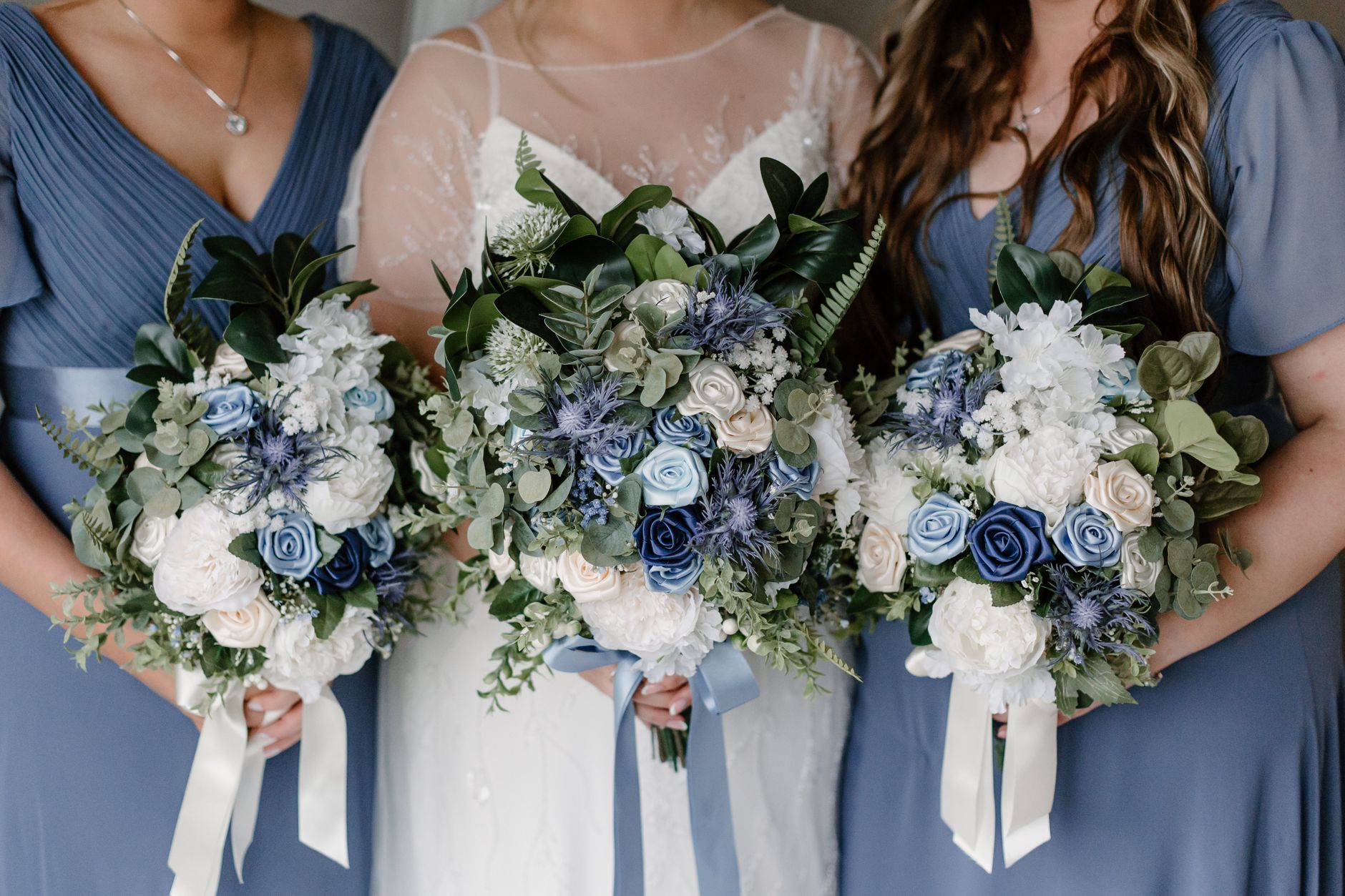
If you want to know the mood of the season, here is what is walking through the door on repeat: loose, garden-style bouquets that look gathered rather than engineered; a palette of warm terracotta, dusty peach, and cream that photographs like a Tuscan afternoon; dahlias and garden roses as the stars; and a general rejection of anything that looks too stiff or too symmetrical. “Effortless” is the request, which is our favorite joke, because effortless is the single hardest look to build. It takes enormous effort to look like nobody tried.
💍 A Few Honest Words If You Are Planning
Two things, from people who do this every weekend. First: book early. The good florists, like the good venues and the good photographers, fill their peak Saturdays months out. If you are planning a July or August wedding, the time to talk to us was arguably last winter — but it is never truly too late for something smaller, and we will always tell you honestly what is possible in the time you have. Second: trust your florist on seasonality. The couples who have the best flowers are almost never the ones with the most rigid vision. They are the ones who say “here is the feeling we want” and let us chase the season to get there.