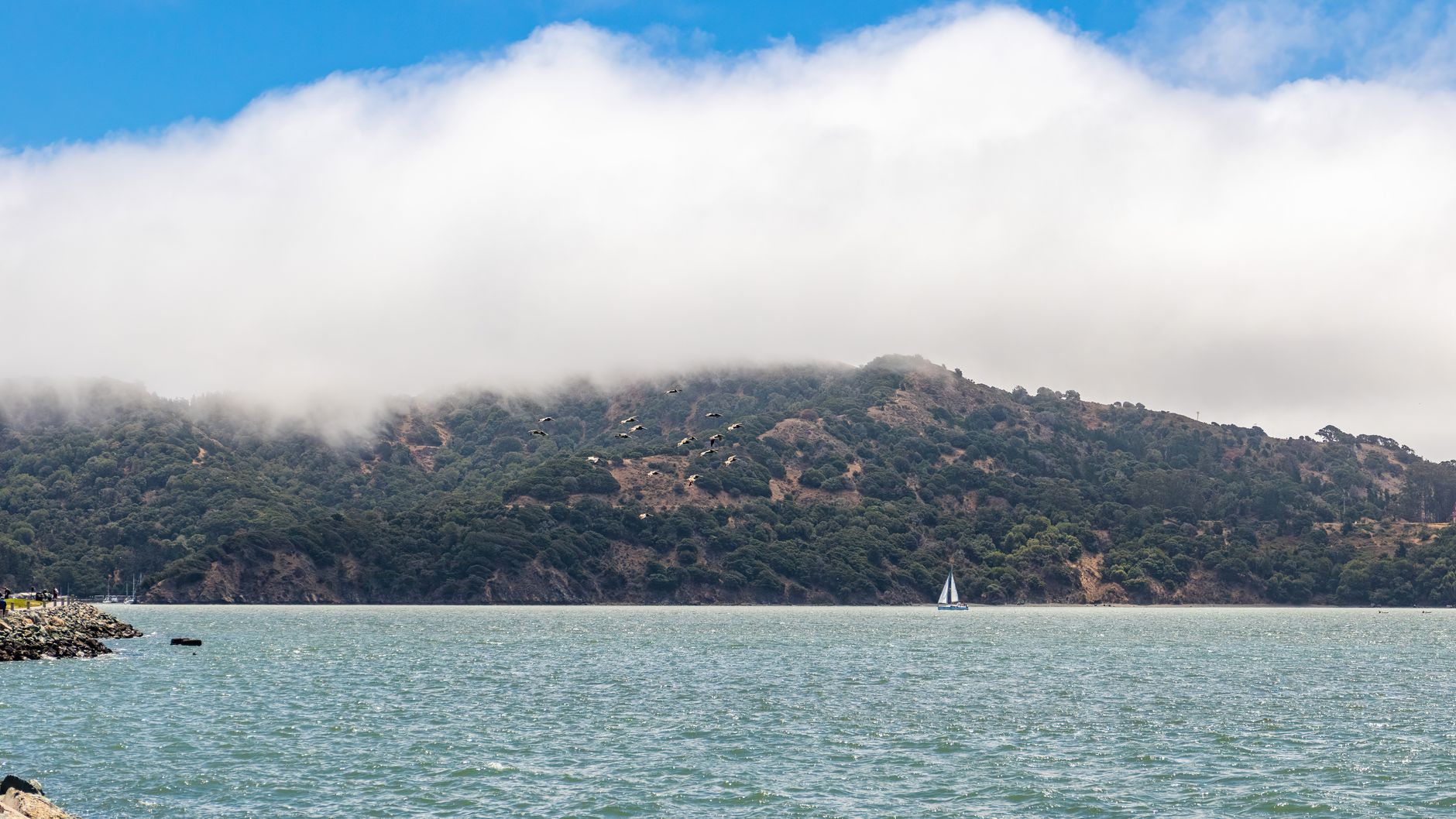
There is a place in San Francisco Bay where the wind blows sideways, the fog rolls in so thick you can taste the salt, the soil is barely soil at all, and roses have been blooming for nearly a hundred years. That place is Alcatraz. And the people who planted those roses were serving life sentences.
The gardens of Alcatraz are one of the strangest, most beautiful, most unlikely botanical stories in America. Almost nobody visits the island expecting flowers. Almost everybody who notices them leaves thinking about them for days. Here’s the full story.
🌱 How Gardens Came to The Rock
Alcatraz wasn’t always a federal penitentiary. Before the famous prison opened in 1934, the island served as a military fortification and military prison going back to the 1850s. The earliest gardens on Alcatraz were planted by military families — officers’ wives who brought soil over by boat, hauled it up the steep paths, and planted whatever might survive the wind and salt spray.
It worked better than anyone expected. The island’s microclimate is harsh but not hopeless — the surrounding Bay moderates temperature extremes, frost is rare, and the fog provides moisture even in the dry season. The military families discovered that with enough imported soil, enough determination, and enough protection from the wind, flowers could grow on Alcatraz.
When the Federal Bureau of Prisons took over in 1934 and turned Alcatraz into America’s most notorious maximum-security penitentiary, the gardens didn’t disappear. They evolved.
🌺 The Inmate Gardeners
This is the part of the story that stops people cold. Inmates at Alcatraz were allowed to garden.
Not all of them. Gardening was a privilege — one of the few available on The Rock — and it was earned through good behavior. Selected inmates were given access to the terraced gardens along the island’s west side, between the cell house and the officers’ quarters, and they tended them with remarkable care.
The most famous inmate gardener was Elliott Michener, a convicted counterfeiter who arrived on Alcatraz in 1941. Michener transformed the western slope gardens into something extraordinary — terraced beds of roses, fuchsias, sweet peas, bird of paradise, snapdragons, and dozens of other ornamentals. He built paths, retaining walls, and planting beds from scavenged materials. He ordered seeds and bulbs from mainland nursery catalogs (approved by the warden). He kept meticulous planting records.
Michener gardened on Alcatraz for over a decade. Other inmates joined him at various times. The gardens became a genuine point of pride for both inmates and staff — one of the few things on the island that everyone could agree was good.
Think about that for a moment. Men who were locked in 5-by-9-foot cells for most of the day, on an island designed to be the most punishing prison in the federal system, spent their precious outdoor hours growing flowers. If that doesn’t tell you something about what flowers mean to people, nothing will.
🍃 What They Grew
The Alcatraz gardens were surprisingly diverse. Based on historical records, nursery catalogs found on the island, and plant identification from the restoration era, the inmate gardeners grew:
- Roses — Dozens of varieties, including hybrid teas, floribundas, and climbing roses trained along the terrace walls. Some of the original rose bushes survived for decades after the prison closed.
- Fuchsias — Perfectly suited to the foggy microclimate. Several large fuchsia specimens on Alcatraz are believed to date to the prison era.
- Sweet peas — Grown along fences and walls. The cool, moist conditions are ideal.
- Snapdragons, nasturtiums, and marigolds — Easy-to-grow annuals that provided quick color.
- Bulbs — Daffodils, narcissus, and crocuses that naturalized and still bloom every spring.
- Succulents and ice plant — Used for erosion control on the steep slopes, these have become some of the most resilient survivors.
- Bird of paradise — The South African native thrives in San Francisco’s mild climate and several large specimens survive on the island.
- Welsh poppies, California poppies, and wildflowers — Both planted and self-seeded, now part of the island’s naturalized landscape.
The variety is remarkable. These weren’t just survival plantings — they were designed gardens with color schemes, seasonal progression, and aesthetic intent. The inmates weren’t just passing time. They were doing floristry.
🌫️ The Decades of Neglect
Alcatraz closed as a prison in 1963. The island was briefly occupied by Native American activists (1969–1971) and then became part of the Golden Gate National Recreation Area in 1972. But for decades, the gardens received essentially no maintenance. The wind blew. The fog rolled. The rabbits and seagulls moved in. Buildings crumbled.
And the gardens — incredibly — kept going.
Not all of them. The annuals died out. The more delicate specimens succumbed to neglect and salt spray. But the toughest plants — the roses, the fuchsias, the succulents, the bulbs, the bird of paradise — hung on. Some not only survived but thrived, freed from competition and spreading into dense thickets. When botanists finally surveyed the island decades later, they found heritage rose varieties that had been growing untended since the 1940s.
The lesson: flowers are tougher than we think. And the ones chosen by Alcatraz’s gardeners were chosen well.
🌿 The Restoration
In 2003, the Garden Conservancy partnered with the Golden Gate National Parks Conservancy and the National Park Service to begin restoring the Alcatraz gardens. The project was led by garden historians and volunteers who spent years researching the island’s planting records, identifying surviving specimens, and carefully restoring the terrace gardens to something close to their prison-era glory.
The restoration team faced unique challenges:
- No irrigation system. Everything is watered by hand or depends on fog drip and rainfall.
- No power tools on the terraces. The gardens are maintained with hand tools only, partly for historic authenticity and partly because the steep terrain doesn’t allow machinery.
- Nesting birds. Alcatraz is a critical nesting site for seabirds, including western gulls, cormorants, and the occasional snowy egret. Garden work is scheduled around nesting seasons.
- Historic preservation rules. The gardens are part of a National Historic Landmark, so every change must be documented and approved.
Today, a dedicated team of volunteers tends the gardens year-round. They grow many of the same species the inmates grew, using the same organic methods (no synthetic fertilizers or pesticides were available in the 1940s, and the restoration follows the same approach).
🌸 What’s Blooming on Alcatraz Right Now (April)
If you visit Alcatraz this month, here’s what you’ll see in the gardens:
- Daffodils and narcissus — The spring bulbs are at peak bloom along the terraces and the path to the lighthouse.
- California poppies — Orange splashes across the slopes, especially on the sunny south-facing sides.
- Welsh poppies — Yellow and orange, naturalized in the shadier areas near the cell house.
- Fuchsias — The early varieties are beginning to flower. By June they’ll be spectacular.
- Calla lilies — White calla lilies grow wild on the island’s slopes, blooming prolifically in spring.
- Succulents — The aeoniums, echeverias, and ice plants are flowering in bright yellows and pinks.
- Pelargoniums (scented geraniums) — Fragrant and flowering along the pathways.
- Heritage roses — The earliest varieties start blooming in late April. The peak rose display is May and June.
For more Bay Area spring bloom walks, our spring bloom guide covers what’s flowering on foot in San Francisco, Oakland, Berkeley, and the Peninsula. And our Golden Gate Park flower trail piece is the perfect companion if you’re making a day of it.
🚢 Visiting the Gardens
- Getting there: Alcatraz Cruises departs from Pier 33 in San Francisco. Book tickets well in advance — they sell out, especially in spring and summer.
- Garden access: The gardens are visible along the main visitor path between the dock and the cell house. The western terrace gardens require walking the outdoor path rather than going directly inside. Most visitors walk right past them focused on the prison — don’t make that mistake.
- Best time: The morning ferry gives the best light for the gardens and the smallest crowds. April through June is peak bloom season.
- Audio tour: The cell house audio tour is excellent but doesn’t cover the gardens in depth. Look for the interpretive signs along the garden paths, or ask a volunteer docent.
- Photography: The contrast of flowers against crumbling prison walls is extraordinary. The rose gardens with the San Francisco skyline behind them is one of the best photo opportunities in the Bay Area.
💐 Why This Story Matters to a Florist
We think about this story a lot. Here’s why:
Flowers grow where they shouldn’t. Alcatraz is a rock. The soil was imported by the bucketful. The wind is relentless. The salt spray corrodes everything. And yet: roses. Fuchsias. Sweet peas. For a hundred years. If flowers can make it on Alcatraz, they can brighten any situation — which is, honestly, the whole point of what we do.
People need beauty. The inmates who tended those gardens were living in the most restrictive prison environment in the country. They chose to spend their limited free time growing flowers. Not because they had to. Because something in them needed to. That impulse — to create beauty, to care for something living, to make a bleak place a little less bleak — is the same impulse behind every flower order we deliver. A hospital room. A hard week. A loss. A celebration. Flowers say “this moment matters enough to make it beautiful.”
Good things survive neglect. The Alcatraz gardens went untended for decades and the strongest plants held on. A good florist arrangement is designed the same way — with hardy, well-chosen stems that hold up for days, not just hours. We think about longevity with every order.
We’re Bay Area Florist, and we deliver fresh flowers daily across San Francisco, Oakland, Berkeley, the Peninsula, and beyond. No windswept island required. 🌸🌊