We wrote about Karl the Fog and how it helps flowers thrive a while back — neighborhood microclimates, which blooms love the moisture, why your bouquets last longer in foggy weather. But we barely scratched the surface of why the fog exists in the first place, and the deeper you go into the science, the more extraordinary the story becomes.
Bay Area fog isn’t just weather. It’s an ecological engine. It waters forests that haven’t seen rain in months. It sustains species that exist nowhere else on Earth. It shapes what grows in your garden, what blooms in our shop, and what survives on the hillsides from Marin to Monterey. Here’s how it all works.
🌊 Part 1: The California Current
Everything starts in the ocean. The California Current is a broad, cold-water ocean current that flows southward along the Pacific coast from British Columbia to Baja California. It carries water from the frigid North Pacific, and by the time it reaches the Bay Area, the surface temperature of the ocean just offshore is typically 50–55°F — even in July and August, when the air temperature inland can reach the 90s and 100s.
That cold water is the first ingredient. But there’s a second process that makes it even colder.
💨 Part 2: Coastal Upwelling
During spring and summer, the prevailing northwest winds push surface water away from the California coast through a process called Ekman transport. As the warm surface water moves offshore, cold, nutrient-rich water from the deep ocean rises to replace it. This is coastal upwelling, and it drops the nearshore water temperature even further — sometimes below 50°F.
That upwelling does two things that matter for our story:
- It creates an extremely cold ocean surface right next to the coast.
- It brings nutrients to the surface that feed massive plankton blooms, which in turn feed fish, which feed seabirds and marine mammals. The entire coastal food chain begins here.
☁️ Part 3: The Marine Layer and Temperature Inversion
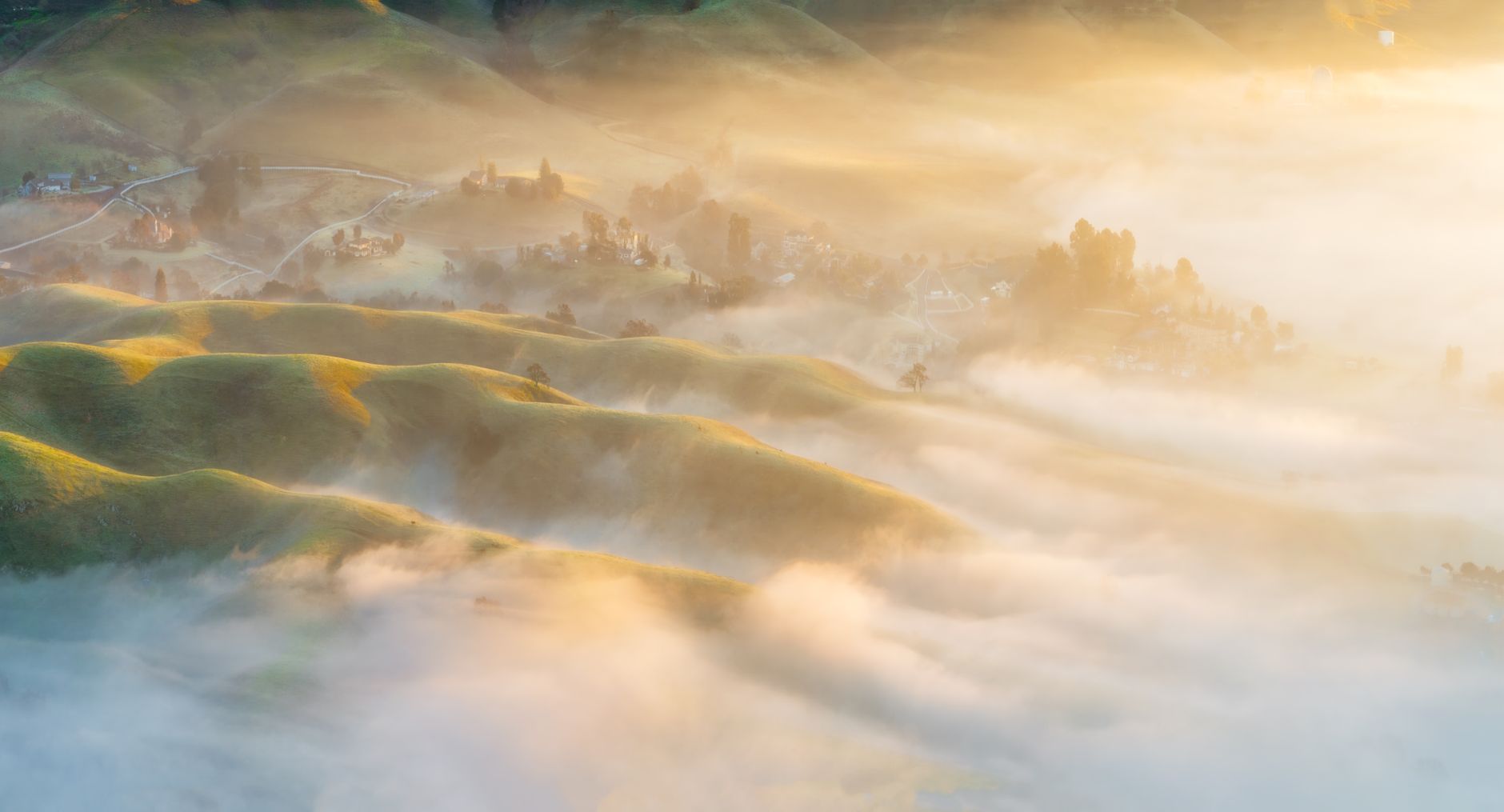
When warm, moist air from the Pacific blows eastward over that cold ocean surface, it cools rapidly. Cool air holds less moisture than warm air, so the water vapor condenses into tiny droplets — and a thick blanket of low-lying cloud forms. This is the marine layer.
Above the marine layer sits a cap of warmer air called the temperature inversion. Normally, air gets cooler as you go higher. In an inversion, a warm layer sits on top of a cool layer, acting like a lid. The fog can’t rise above it. So the marine layer stays trapped near the surface — typically between 1,000 and 2,000 feet thick — a cold, moist blanket hugging the coast while the air above it is warm and clear.
If you’ve ever driven across the Golden Gate Bridge and emerged from thick fog into blazing sunshine within half a mile, you’ve experienced the inversion layer in action.
🌉 Part 4: The Golden Gate Funnel
Here’s where San Francisco’s geography makes the story unique. The Golden Gate — the mile-wide gap between the Marin Headlands and the San Francisco Peninsula — is the only sea-level break in the Coast Range for the entire central California coast. It’s a natural funnel.
During summer, the Central Valley heats up dramatically. Hot air rises, creating a low-pressure zone. That pressure differential sucks the cold marine layer through the Golden Gate like air through a bellows. The fog pours through the gap, spills over Twin Peaks, flows down through the Sunset and Richmond districts, and pushes into the Bay.
The result: San Francisco gets fogged in from the west while Oakland and Berkeley on the east shore stay clear. The Peninsula gets fog along the coast but sunshine a few miles inland. Marin gets fog in the valleys but sun on the ridges. Every neighborhood has its own microclimate, and the dividing line between fog and sun can be as narrow as a single block.
This is why your garden in the Sunset grows completely different plants than your friend’s garden in Walnut Creek, even though you live 20 miles apart.
💧 Part 5: Fog Drip — The Invisible Rain
This is the most remarkable part of the system, and the one with the biggest ecological impact.
When fog rolls through a forest or over vegetation, the tiny water droplets in the fog collect on leaves, needles, branches, and spider webs. The droplets merge, grow heavy, and fall to the ground. This is fog drip, and it can deliver significant amounts of water — studies in the Bay Area have measured fog drip equivalent to 10–20 inches of rainfall per year in coastal forests.
In a region where it essentially doesn’t rain from May through October, fog drip is the difference between life and death for many plant species. The coast redwoods — the tallest living organisms on Earth — depend on fog drip so heavily that their range almost exactly matches the fog belt along the California coast. No fog, no redwoods. It’s that direct.
The redwoods in Muir Woods, the groves in Purisima Creek, the stands in Oakland’s Joaquin Miller Park — all sustained by fog. When you walk through those forests on a summer morning and feel moisture dripping even though it hasn’t rained in weeks, that’s the fog watering the forest.
🌿 How Fog Shapes What Grows Here
The fog belt creates a gardening and farming climate unlike anywhere else in the continental United States:
- Cool summers: Average July highs in San Francisco are 67°F. In foggy neighborhoods like the Outer Sunset, it’s more like 62°F. This means heat-sensitive plants that struggle in most of California — fuchsias, hydrangeas, begonias, ferns, impatiens — thrive here year-round.
- Natural humidity: Fog keeps humidity elevated even during the dry season. This reduces water stress on plants, slows transpiration, and means gardens need less irrigation than comparable gardens 20 miles inland.
- Mild winters: The ocean moderates winter temperatures too. Hard freezes are exceptionally rare on the coast. This allows tender perennials, subtropicals, and Mediterranean species to survive outdoors year-round.
- Extended bloom seasons: Many flowers bloom longer in the Bay Area’s coastal zone than anywhere else because they never experience the extreme heat that triggers dormancy. Roses in San Francisco can bloom nearly year-round. Fuchsias flower from spring through fall without interruption.
- Cut flower longevity: The same cool, humid conditions that help plants grow also help cut flowers last longer in the vase. A bouquet delivered in fog-cooled San Francisco will typically outlast the same bouquet in a hot inland valley by days.
This is why the Bay Area’s commercial flower farms — especially along the coast in Half Moon Bay, Pescadero, and the Salinas Valley — produce some of the finest flowers in the world. The climate is a gift. We touched on local growing in our spring bloom walking guide and explored Golden Gate Park’s plantings in the flower trail piece.
🦋 Fog and Wildlife
The fog belt doesn’t just grow flowers. It sustains an entire ecosystem of wildlife that depends on the cool, moist conditions:
- Coast redwood forests: As mentioned, the redwoods are fog-dependent. The forests they create shelter an enormous biodiversity — banana slugs, Pacific giant salamanders, marbled murrelets (a threatened seabird that nests in old-growth redwood canopy), and dozens of fern and moss species.
- Mission blue butterfly: This federally endangered butterfly survives only in the fog belt of the San Francisco Peninsula and Marin County. Its larvae feed on lupine species that grow in the coastal grasslands kept moist by fog. The largest remaining populations are in the Marin Headlands and on San Bruno Mountain.
- Seabirds: The upwelling that creates the fog also creates the nutrient-rich waters that feed the Bay Area’s seabird colonies. Alcatraz Island — which we just wrote about in our Alcatraz gardens piece — hosts nesting colonies of western gulls, Brandt’s cormorants, and black-crowned night herons, all sustained by the same cold-water food chain.
- Harbor seals and sea lions: The nutrient-rich upwelling waters support the fish populations that in turn support the Bay’s famous marine mammals at Pier 39 and along the coast.
- Native bees and pollinators: The extended bloom season supported by fog means Bay Area native bees have a longer foraging window than their inland counterparts. The coastal scrub and grassland wildflowers that depend on fog moisture support dozens of native pollinator species.
- Raptors: The fog belt’s forests and grasslands support red-tailed hawks, Cooper’s hawks, great horned owls, and the occasional peregrine falcon (which nests on Bay Area bridges and buildings). The prey base — small mammals in the coastal grasslands — depends on the vegetation that fog sustains.
🌡️ Fog and Climate Change
There’s a less cheerful chapter to the fog story. Research over the past two decades has suggested that Bay Area fog frequency has declined — some studies estimate a reduction of about 33% over the twentieth century. The causes are complex and debated, but likely involve changes in ocean temperature patterns, land-use changes in the Central Valley (irrigated farmland stays cooler, which may weaken the pressure differential that pulls fog inland), and broader climate shifts.
Less fog means less fog drip, which means more water stress on coastal ecosystems. Redwood forests at the southern edge of their range are particularly vulnerable. Native grasslands that depend on summer moisture are at risk. And the unique garden microclimate that makes San Francisco such an extraordinary place to grow flowers could gradually shift.
This isn’t a crisis — the fog belt isn’t disappearing — but it’s a trend worth watching. The same atmospheric system that makes Karl famous also keeps the ecosystem running, and any change to it ripples through everything from redwood canopies to the bouquets on your kitchen table.
💐 What This Means for Your Flowers
Here’s the practical florist takeaway:
- Your Bay Area flowers last longer than you think. The cool, humid air that fog brings is the same environment used in professional floral coolers. On foggy days, your arrangement is essentially living in a natural refrigerator.
- Seasonal is smarter. The Bay Area grows extraordinary flowers precisely because of its unique climate. When you order seasonal, locally influenced arrangements, you’re getting flowers that want to be here — and they look and last better for it.
- The fog is a feature, not a bug. Visitors complain about June gloom. Gardeners and florists know better. The fog is the reason this region grows world-class roses, dahlias, hydrangeas, and sweet peas. It’s the reason your hanging basket — which we covered in our hanging baskets care guide — thrives on your porch while your friend’s wilts in Sacramento.
At bayflorist.com, we deliver fresh flowers daily across San Francisco, Oakland, Berkeley, the Peninsula, and beyond. Every arrangement benefits from the same foggy, flower-friendly climate that makes this place unlike anywhere else. 🌫️🌸