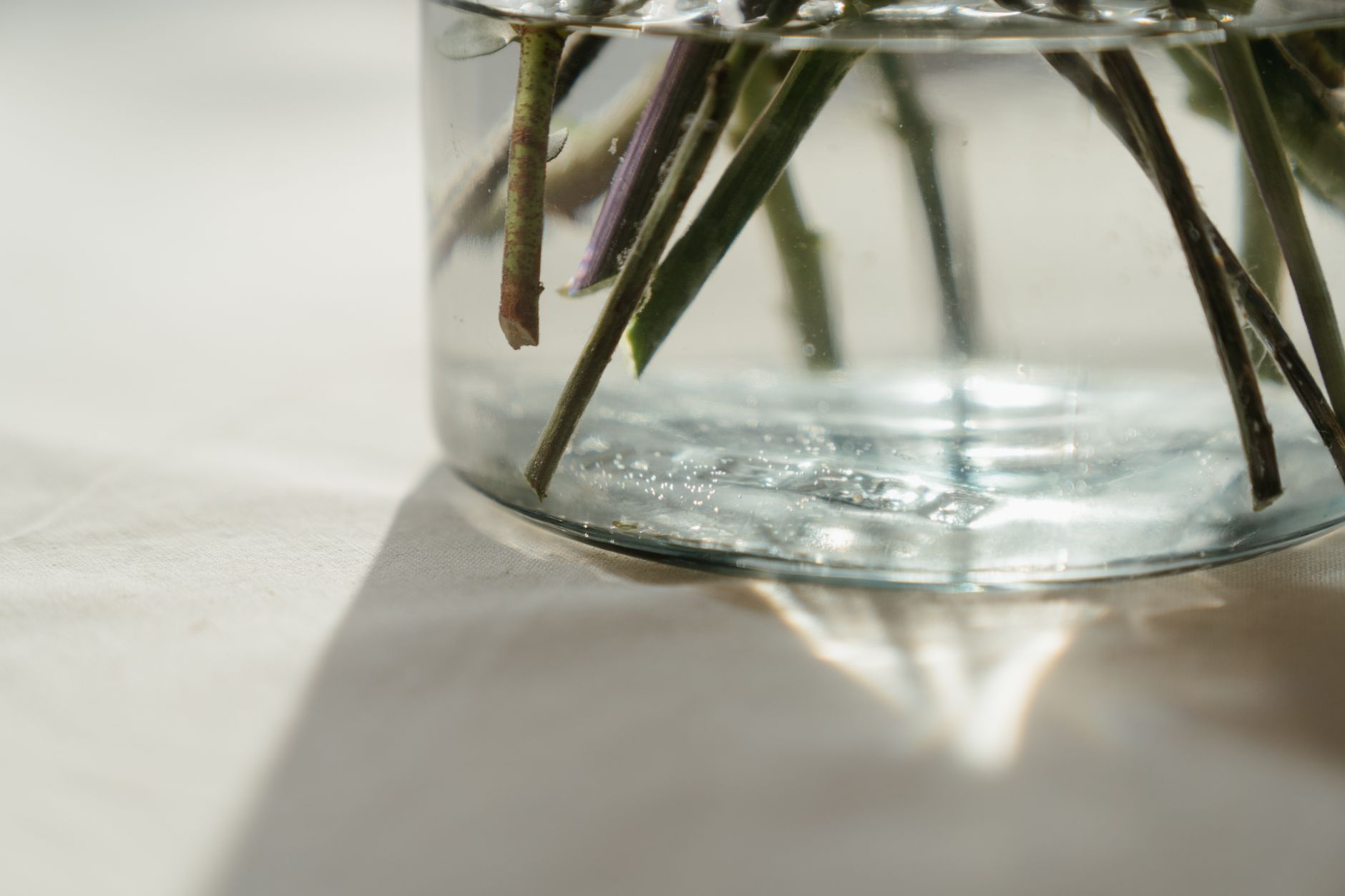
Look at a finished bouquet in a vase and you see flowers. Look at the same vase from the side, through clear glass, and you often see something else: a crisscross of clear tape, a crumpled coil of wire, a block of green foam. The prettiest arrangements are not held together by luck. Under the petals there is a small piece of engineering whose only job is to keep long, slippery, top-heavy stems exactly where the designer put them. This is a tour of that hidden layer, from the old tricks to the newer ones, and what each does best.
The Problem Every Arrangement Has to Solve
Cut stems want to do three things: slide down, lean over and spread out. A wide-mouth bowl makes it worse, because there is nothing to lean on. Whatever method a florist chooses has to do four jobs at once. It has to hold stems at the angle you want, keep them in water, stay out of sight, and survive a trip to someone’s front door without tipping.
Floral Foam: The Convenient One
Floral foam is a block of foam used by florists to fix flower stems in place for storage and delivery. You can soak it in water, push stems into it at almost any angle, and the stem stays put. It is easy to learn, forgiving of beginners, and good for pieces that have to travel, which is why it spread so widely through the trade.
It also has a downside. Wikipedia’s entry on floristry describes floral foam as non-biodegradable and non-recyclable, and that is one reason some designers have moved to other methods. It also limits you in a small way: once a stem has been pushed in and pulled out, the hole is still there.
Chicken Wire: The Old Reliable
A crumpled ball of chicken wire pressed into a vase or bowl makes a springy cage that grips stems at many angles. Designers like it because it holds a large, loose arrangement, because it can be reused, and because stems can be moved and re-placed without leaving a mark. It also lets you build the airy, garden-gathered shapes that have been popular for years. The trade-off is that it takes a little practice and a pair of wire cutters, and the cut edges of the wire are sharp.
Tape Grids: The Cheap Trick
This one is simple enough to try tonight. Stretch strips of clear floral tape across the mouth of a vase in a grid, like a tic-tac-toe board, and press the ends firmly onto the dry glass. The small squares make a lattice that holds each stem upright and apart from its neighbors. It works especially well for a clear glass vase of garden roses, tulips or sunflowers, where stems that would otherwise collapse into the middle stay arranged around the edge.
Flower Frogs and Kenzans: The Japanese Idea
A flower frog is a device that helps arrange flowers. Some, such as the Japanese kenzan, are metal devices that sit in the bottom of a bowl or vase and fix the stems on a bed of metal needles. Ikebana, the Japanese style of floral design, is best known for its simplicity of line and form, and the kenzan lets a designer place a single branch or bloom at a precise angle with nothing else in the way. Other flower frogs are ceramic or glass objects with holes or guides for stems, and many are small pieces of art on their own. As metal flower frogs became popular, a flurry of patents followed, each promising to help people arrange flowers more quickly.
The Hand-Tied Bouquet: No Hardware at All
The one method that needs no container hardware is the hand-tied bouquet. The designer holds the stems in one hand and adds each flower at a slight angle, turning the bunch a little each time, so that the stems form a spiral. A tie at the binding point holds the whole bunch together, and the spiral lets the stems fan out under the flowers. A hand-tied bouquet can then stand in a vase, where the spiral keeps the shape balanced.
How to Try a Tape Grid at Home
- Dry the mouth of a clean glass vase completely, so the tape will stick.
- Lay a strip of clear tape across the opening, then a second strip across the other way to form a cross.
- Add two or three more strips in each direction to make a grid of small squares.
- Fill the vase partway with cool water, and trim your stems at an angle.
- Place the largest flowers first, one per square, and add smaller flowers and greens around them.
Quick Questions
Is floral foam bad for flowers?
Not for the flowers themselves, since foam holds water and stems well. The concern designers raise is that it is not biodegradable or recyclable.
What is a kenzan?
A Japanese flower frog: a metal base with needles that hold stems in place in a bowl or vase.
Which method is easiest at home?
A clear tape grid across the mouth of a vase, because it needs only tape and scissors.
Do hand-tied bouquets need foam?
No. The spiral of stems holds the bouquet together without it.