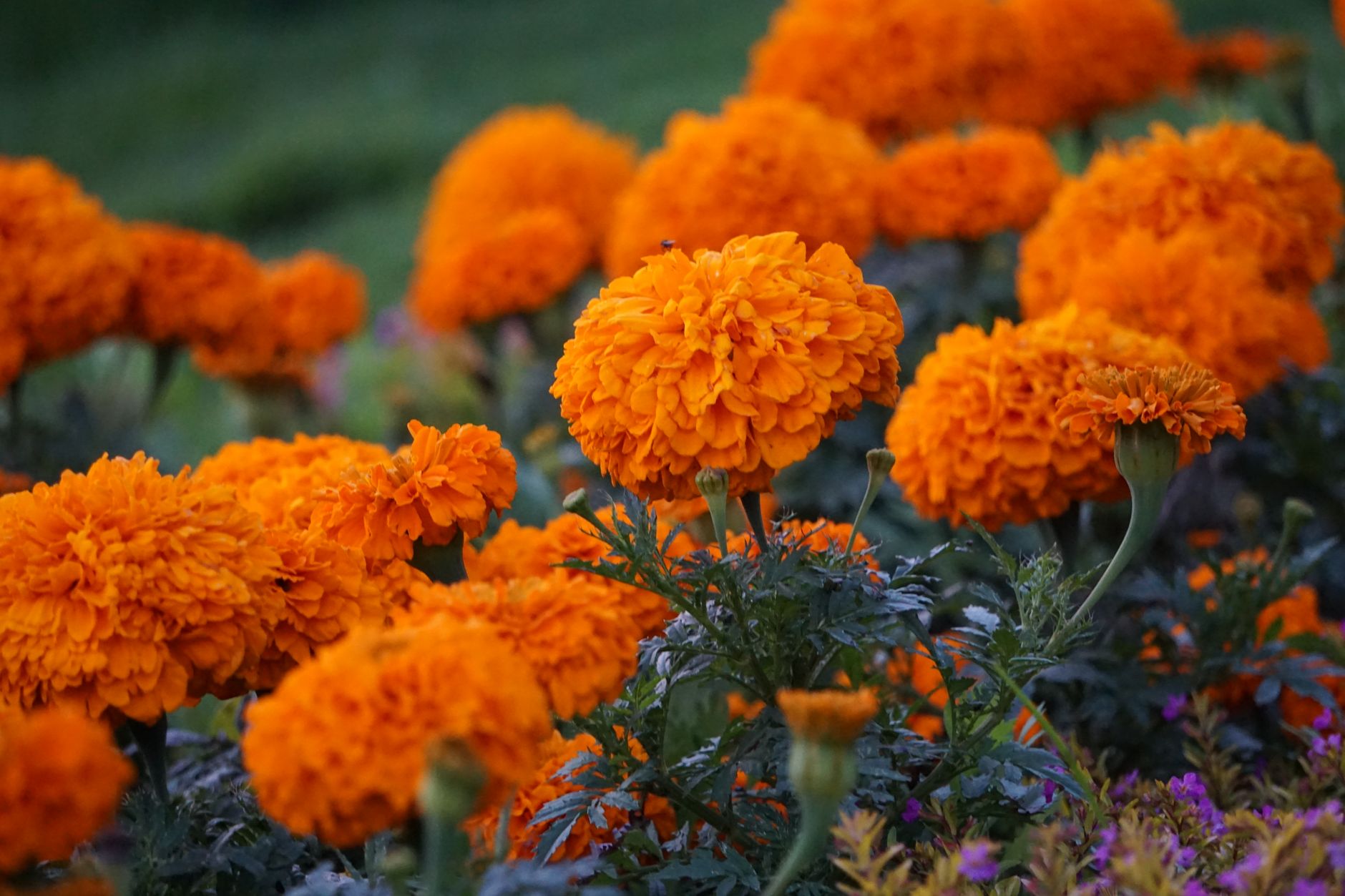
Every October, marigolds start showing up in the Bay Area: in buckets at florists, in pots outside grocery stores, in hands carried through Mission District and Fruitvale streets. They look like Halloween flowers because they are orange and arrive in the same weeks, but they are not. Marigolds belong to Día de los Muertos — the Day of the Dead — a Mexican tradition of remembering and welcoming back loved ones who have died. It is a celebration of love and memory, not a spooky party, and it deserves more than a plastic skeleton.
This year, Halloween lands on Saturday, October 31, and Día de los Muertos follows on Sunday, November 1 and Monday, November 2. Here is what the flowers mean and how they are used, written by a florist who loves these blooms and wants to treat them well.
🌼 Cempasúchil: The Flower of the Dead
The marigold of Día de los Muertos is cempasúchil (Tagetes erecta), a large, ruffled, golden-orange flower native to Mexico. Its name comes from Nahuatl and is usually translated as “twenty flowers” — meaning “many,” because each bloom is packed with petals. It has been used in Mexican remembrance traditions for centuries.
There are three reasons the flower is central:
- Color. The bright orange and gold are said to help guide spirits back home, like a lit path.
- Scent. Cempasúchil has a strong, earthy, slightly bitter fragrance. In the tradition, the smell helps the dead find their way to the living.
- Abundance. The tradition is generous. Petals are scattered, wreaths are built, and flowers are piled up. More is better.
🕯️ What Is an Ofrenda, and Where Do the Flowers Go?
An ofrenda is a home altar built to welcome the spirits of family members and friends who have died. It is not a shrine to worship; it is a table set for guests. Typical elements include:
- Photographs of the people being remembered.
- Candles to light the way.
- Favorite foods and drinks, plus pan de muerto, the sweet bread of the season.
- Papel picado, the cut-paper banners that flutter over the altar.
- Sugar skulls and small personal mementos.
- Marigolds in vases, in garlands, in arches over the altar, and in a trail of petals leading from the door.
Other flowers often appear next to the marigolds: cockscomb (celosia, sometimes called terciopelo), baby’s breath, and purple and white blooms that add contrast. The orange stays the star.
📅 November 1 and November 2
The two days are traditionally observed differently. November 1 is commonly dedicated to children who have died, and November 2 to adults. Families vary in how they celebrate, and the details differ between regions and households, so if you are invited to someone’s home, follow their lead.
The distinction from Halloween matters. Halloween is about costumes and candy, and the two holidays share a calendar neighborhood but not a meaning. It is fine to enjoy both. Just do not use Día de los Muertos as a costume theme or a decoration style without understanding what it is.
📍 Día de los Muertos Around the Bay
The Bay Area has one of the strongest Día de los Muertos traditions outside Mexico. Communities in San Francisco’s Mission District and Oakland’s Fruitvale neighborhood, along with others around the region, hold public altars, processions, music, and art each fall. Dates and locations change from year to year, so check local event listings before you go. If you attend, treat it as the community remembrance it is: stay respectful, ask before photographing people or altars, and consider bringing a flower or a photo if the event invites offerings.
🛒 Where to Find Marigolds
- Your florist. We bring in marigolds and cockscomb for the season; ask early in October.
- Farmers markets. Late-season stalls often carry bunches and pots. Our guide to Bay Area farmers markets and flower stalls has tips for browsing.
- Nurseries and groceries. Potted marigolds are cheap and easy, and many people grow their own. Bay Area fall weather is mild enough that they often keep blooming for weeks.
- Wholesale. If you are curious how flowers reach the shop, see our look at the San Francisco Flower Mart.
🧹 How to Keep Marigolds Looking Good
- Strip the leaves below the waterline. Marigold foliage fouls the water quickly and smells strongly when it does.
- Change the water every day or two. Fresh water, a clean vase, and a fresh stem cut make a real difference.
- Keep them cool. Heat and sun shorten their life, so avoid a sunny window.
- Expect a few days to a week of beauty. Heads can also be pulled off and used as petals for an altar trail.
- Save what you can. After the holiday, our guide on drying and pressing flowers works well for marigold heads.
🤝 If a Friend Is Building an Ofrenda
If someone you know is honoring a loved one, a bunch of marigolds is a thoughtful, welcome gift — especially if you ask first. Offer to help with the shopping, bring a bunch of fresh cempasúchil, and let them decide where it goes. If the person you are thinking of is grieving more broadly, our guide to sympathy flower etiquette and our sympathy flowers page can help you choose something that fits.
🧡 The Bottom Line
Marigolds are the heart of Día de los Muertos, and the tradition is about love that outlasts loss, not about fright. If you are celebrating, we are glad to help you find the flowers. If you are learning about it, take your time, ask good questions, and let the community lead. For fresh cempasúchil, cockscomb, and other autumn stems delivered anywhere in the Bay Area, browse our arrangements or call and tell us what you need. 🧡