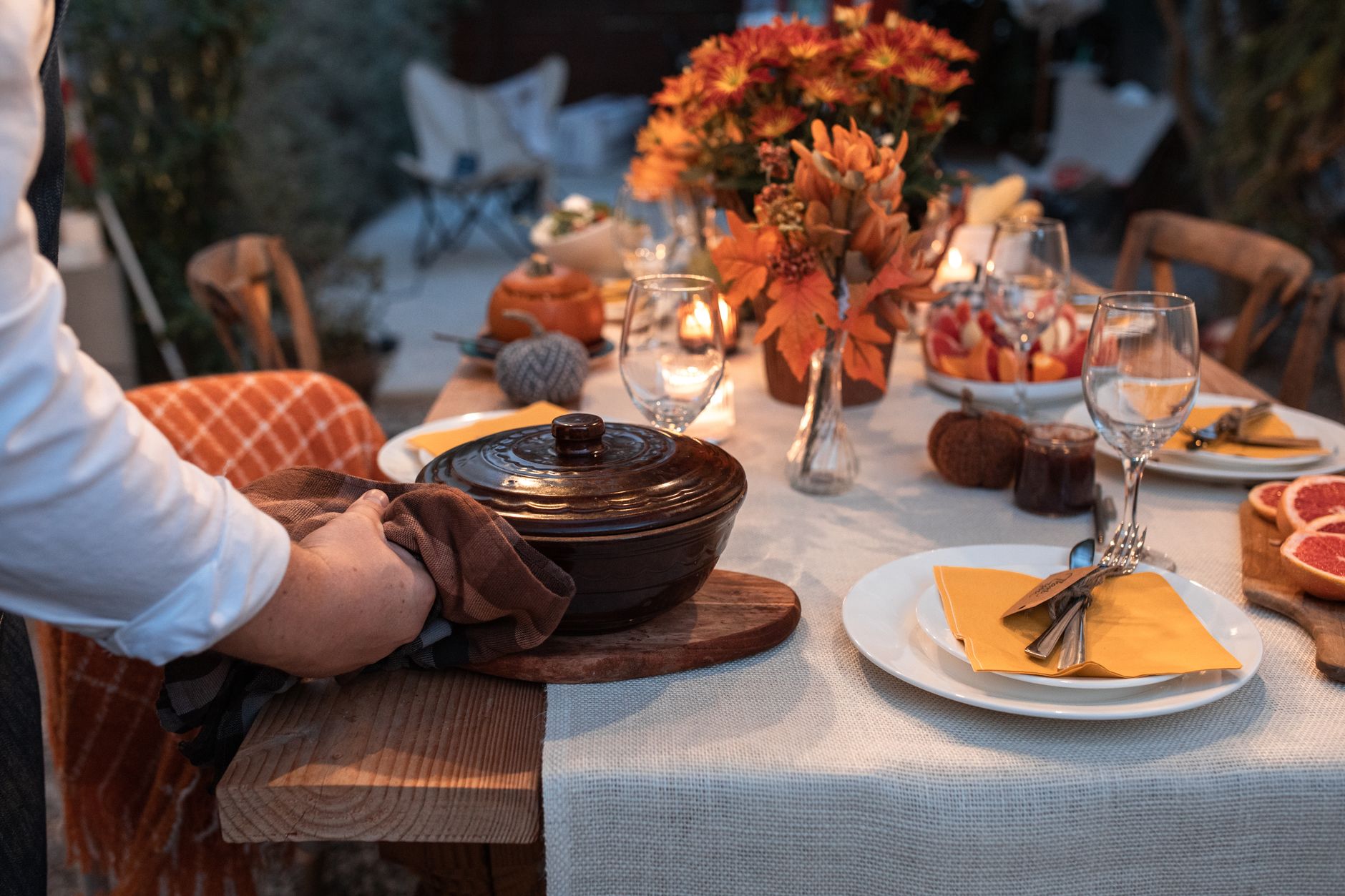
Thanksgiving falls on Thursday, November 26 this year, ten days from now, and the table is about to become the busiest piece of furniture in the house. It has to hold a turkey, a stack of plates, three kinds of potatoes and somebody’s elbow. Flowers can make that table feel like a celebration, but only if they know their place. Here is how florists think about it.
Rule One: Keep Eye Lines Open
A dinner table is a conversation, and a tall arrangement splits it down the middle. The usual rule of thumb is to keep a centerpiece low enough to see over when you are seated, or to go the other way and use slim, airy stems that people can look through. A bowl, a low vase or a row of small bud vases down the center of the table all work. If the arrangement is tall, put it on a sideboard or buffet, where it can be as dramatic as you like.
Rule Two: Let the Food Smell Like Food
A Thanksgiving table already has plenty going on for the nose: roast turkey, sage, butter, pie. Strongly scented flowers compete with it, and a heavy perfume next to the gravy is no one’s idea of a good time. Lilies, hyacinths and tuberose are lovely in the hall but are better kept away from the dining table. For the centerpiece, choose flowers with a light scent or none at all.
Rule Three: Think About the Mess
Anything that drops, drips or stains will do it in the middle of dinner. Lily pollen, for example, stains tablecloths, so florists often pull the pollen-bearing parts out of the flower, and you can ask for that when you order. Strip leaves below the water line so the water stays clear, and set the vase on a coaster or a small mat in case of a splash.
Flowers That Behave at a Dinner Table
- Roses, in cream, blush or deep burgundy
- Spray roses, for a looser, garden look
- Alstroemeria, which looks like a small lily without the perfume
- Sunflowers, for warmth
- Chrysanthemums, the classic flower of the season (see our guide to mums)
- Dahlias, if you can find them this late
- Berries, small pumpkins, gourds and fall foliage to fill out the design
- Herbs such as rosemary and sage, which add texture and a smell that matches the menu
If You Have Pets
Holiday gatherings put flowers within reach of curious noses. The ASPCA’s poison-control plant list is a useful reference, and a few entries stand out:
- Lilies and cats: the Easter lily is listed as toxic to cats, with vomiting, lethargy and kidney failure among its signs, and death is possible. Dogs are listed as unaffected. If a cat lives in the house, skip lilies entirely.
- Listed as non-toxic to dogs and cats: roses, sunflowers and Peruvian lily (alstroemeria).
The same list marks chrysanthemums, carnations, hydrangeas, daffodils, tulips and eucalyptus as toxic to dogs and cats, with effects that range from stomach upset to more serious signs. A pet that chews flowers is a good reason to choose roses, sunflowers and alstroemeria, and to place the vase where a paw cannot reach. If your pet eats something questionable, call your veterinarian or the ASPCA Animal Poison Control Center at (888) 426-4435 right away; a consultation fee may apply. Our guide to holiday plants and pet safety covers poinsettias and the rest of the season.
Three Simple Designs
The low bowl. Fill a shallow bowl with water, float a few short roses or chrysanthemum heads, and tuck in a few berries. It takes five minutes and nothing blocks a face.
The pumpkin vase. Hollow out a small pumpkin, set a glass or jar inside, and fill it with water and short stems. It is the one centerpiece that doubles as décor.
A row of small bottles. Collect a few clean bottles and jars, put a single stem in each, and line them down the table. If one gets knocked over, no harm done.
Making It Last Through the Weekend
If you want the flowers to look good on Friday, give them clean water and keep them away from the oven and the heat vents. Our guide to why cut flowers wilt faster in winter has the details. And if you are heading to someone else’s table, flowers are a welcome host gift, as long as they arrive ready to drop into a vase.